 Peggy Whiteneck, Freelance Writer |
"Average Americans" Need Lessons in American Civics- ©Peggy Whiteneck
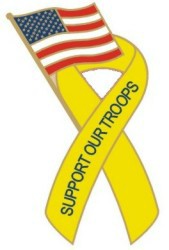
Months before the 2004 election, ribbon bumper stickers began to sprout up all
over, in various designs of yellow, black, and patriotic red-white-and-blue and
bearing the sentiment "Support Our Troops." Before long, they were everywhere -
especially visible high up on the bumpers of gas-guzzling SUV's, affordable
to purchase and maintain only by America's most affluent drivers.
As a generic exhortation to support the troops, the ribbon stickers make little sense: Like, who doesn't support the troops? Unless you think that disagreeing with the President "in a time of war" is somehow undermining the troops. In fact, the President and his cabinet cronies have been very effective in convincing a significant percentage of Americans that dissent equals disloyalty, that dissent demoralizes the troops and feeds terrorist aspirations - all powerful and effective arguments for driving healthy dissent to its knees. It worked for four long years of the first Bush administration and launched it on its merry way to re-election. Lessons in American CivicsBack in the day, pubic schools actually taught American civics. I found it boring as hell when I was in middle school, but somehow, its lessons stuck. Lament-ably, the teaching of American civics seems to have gone the way of all things deemed not strictly necessary under successive waves of cost-cutting and teaching to "basic standards." Just listen to "average Americans" interviewed for the media or calling in to various radio stations. Just before the last midterm election, a voter explained why he would be opposing a given Congressional candidate: "He voted against the President!" (The candidate had publicly admitted that he hadn't voted for Bush in the 2004 general election.) The voter further explained that anyone who wouldn't vote for the President didn't deserve to be voted for in turn. He went so far as to say the Congressman in question had committed treason - yes, that's right folks, treason, and by the mere free exercise of the franchise. Listening to this on my car radio, I about drove off the road. In another example, a caller to a talk show objected that the prisoners at Guantanamo Bay were actually demanding legal representation. "Imagine!" the caller said with huffy outrage and not a trace of irony. Apparently, he thinks habeas corpus (the right to challenge the grounds of one's detention) and other protections against detention without representation only apply to Americans - or at least the ones not being held at Gitmo. In an astounding third example, an interviewee loudly sputtered, "The Courts don't get to decide what's Constitutional. The American public decides what's Constitutional!" Say,what? If the American public were that unerringly wise, we wouldn't need a Constitution or the courts or laws. If the American public got to decide what's Constitutional, women would still be banned from the polls and people of color would still be being driven out of them with fire hoses and attack dogs. It's Called "Checks and Balances"Fortunately, our government is a system of checks and balances between three major branches of government: executive, judicial, and legislative. The Court is supposed to check both the power of the President and bad laws made by Congress - code rhetoric about "judicial activism" notwithstanding. (Arguably, any judge not sitting on a couch "vegging" is a judicial activist. Why else would successive administrations of Presidents, from both parties, be falling all over themselves for a crack at appointing a Supreme Court judge?)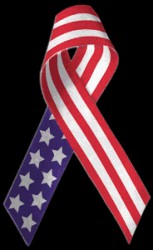
Congress is likewise supposed to check the President (who wasn't elected Pope and isn't infallible - any more than is the Supreme Court, as a series of incredibly bad decisions from Dred Scott to Carrie Buck underscores), as well as to make clearer laws if it feels the judiciary is getting the interpretation wrong. Congress has not just a right but an elected duty to shape American domestic and foreign policy - most especially in a time of war, the President's role as "Commander in Chief" notwithstanding. It is, indeed, ironic that, while our soldiers are fighting and dying in Iraq, ostensibly to bring democracy to the Middle East, so many Americans remain ignorant of what American democracy entails. If the most gung-ho among us really want to support our troops in Iraq, they might begin by understanding what it is our troops are fighting for. |
· "Finding a Voice in an Age of
Intolerance" ·
· "The Question for Election 2008"
·
· "Affirmative Action Discriminates
Against White Men? Give Me a Break!"
·
· "On Proudly Wearing the
Scarlet 'L' " ·


|
The logo banner for this
site was generated at Cool Archive (http://www.coolarchive.com/) and
the side border graphic was provided courtesy of Pambytes (www.pambytes.com).
Special thanks to Monica L. Stewart for the matching logo design. Buttons
at the bottom of the page were texted using graphics provided
courtesy of Button Generator (www.buttongenerator.com). All photographs and
text content on this site are
© Peggy Whiteneck. No reproduction
of any part of this content is permitted
without express permission of the
web site author.